More insight, lower costs: Cyclomedia helps fiber optic installer Jacops with up-to-date data and street views
Jacops, a Belgian specialist in infrastructure technology, is working on the installation of fiber optics throughout Belgium. But before digging, the team needs to know exactly what they are going to encounter outside: asphalt or cobblestones, verge or pavement, free passage or obstacles. These details determine the design and the costs of the implementation. That is why Jacops does an infra survey in advance: a study of the streetscape to make planning and calculation as realistic as possible. It is precisely in this preparation phase that Cyclomedia's tools and data appear to make a big difference.
The challenge: getting a grip on the surface and conditions, without unnecessary fieldwork
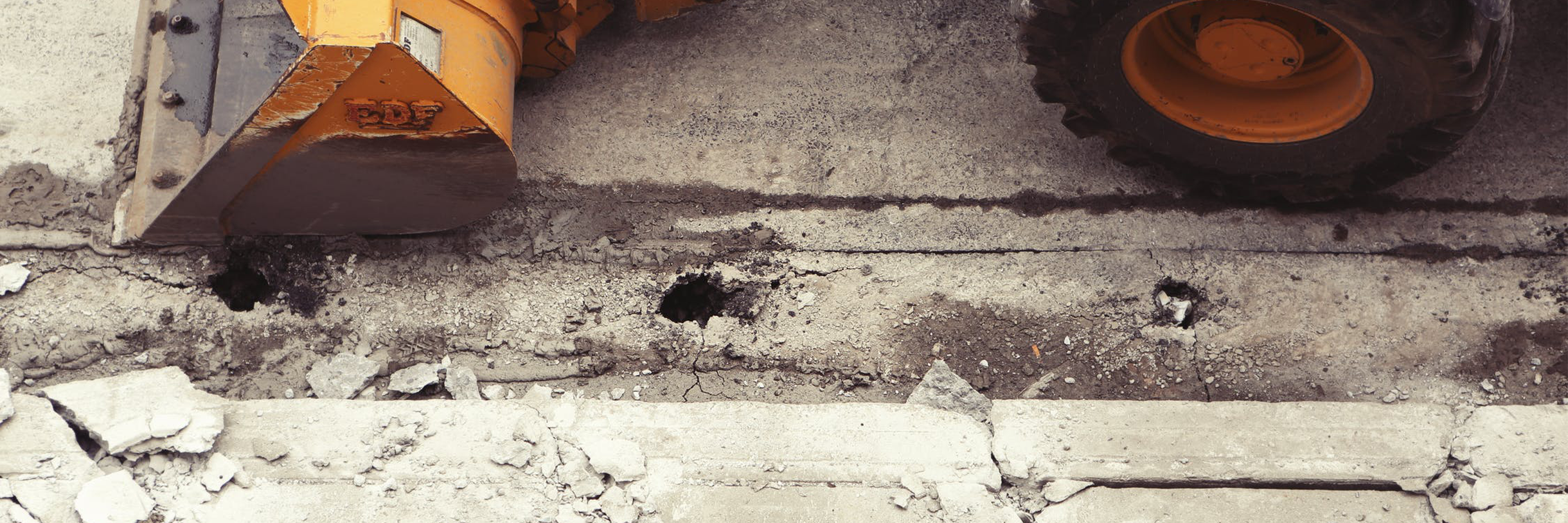
In the case of fibreoptic projects, the costs are highly dependent on the conditions in the street: the type of surface, the pavement, planting, obstacles and recent changes dueto other work. When installing fiber optics, Jacops therefore wants to know at an early stage which route sections are complex. This helps to better substantiate design choices, plan implementation more efficiently and estimate costs more realistically in advance. To map this out, Jacops often used street images from public sources, such as Google Street View, but these were not always accurate enough.
"An important bottleneck was the topicality of the images, says Alexander Carels, Service Manager within the Design & Engineering department at Jacops: "In order to make a good estimate, the images must be recent, preferably less than a year old, and ideally even less than six months. With public sources you do have images, but current events are not reliable and the quality is often too limited for what we need."
If that certainty is lacking in the preparation, a colleague has to go out more often to check the situation on site. This takes time, makes projects less predictable and delays decision-making in the design phase.
Cyclomedia: more recent images, better quality and easy to use
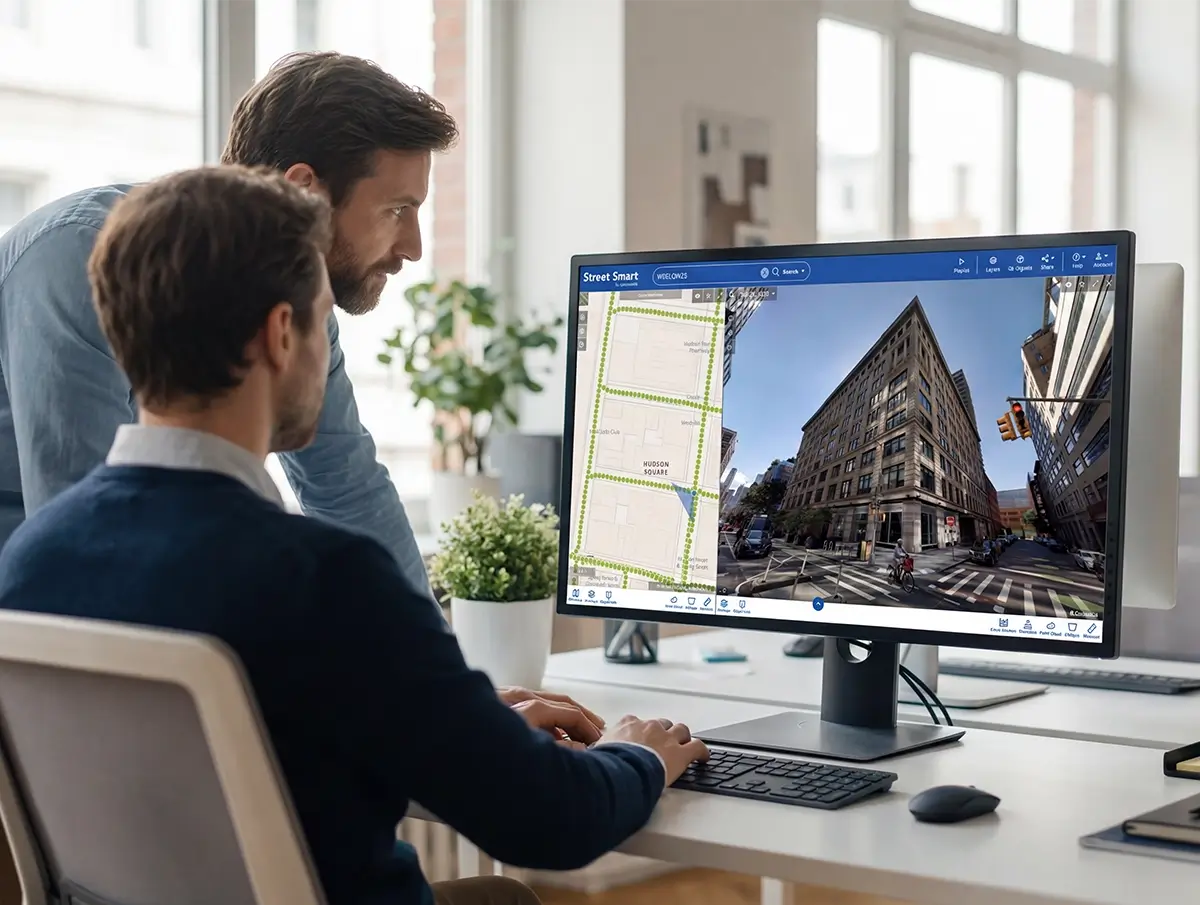
Jacops was therefore looking for a good alternative to map the current street scape, and Cyclomedia turned out to be the right partner. "We had heard of Cyclomedia before and we were especially convinced by the combination of usable, recent images that are of high quality and therefore suitable for engineering and preparation forwork. In addition, Cyclomedia offers the possibility to practically integrate their Street Smart tool, which allows us to easily view the street images, into our daily workflow," says Carels. "The LiDAR scans, a kind of 3D measurements of the environment made with lasers, and the possibility of having new, more recent images made are also nice extras."
According to Carels, the implementation of the tools went smoothly: "It all works quite naturally, so the start-up went almost flawlessly. Atthe start of the collaboration, we did two sessions with Cyclomedia tofamiliarize ourselves with the system and after that we were able to easily move forward with it ourselves."
Advantages: faster identification of obstacles, better substantiation and less fieldwork
For their work, Jacops mainly uses Street Smart, a tool with images of (among others) the Netherlands and Belgium, similar to Google Street View, but of higher quality. Jacops also uses Cyclomedia's Surface Types Enhanced solution, which provides insight into the different surface types. These tools help Jacops gain earlier and more consistent insight into situations that impact network design, implementation,and costs. This provides a number of concrete advantages:
1) Early insight into parts of the trajectory that are expensive or complex
For example, Jacops can assess trajectories in advance and look at alternatives where necessary. "We want to be able to estimate as much as possible inadvance what impact the streetscape and any obstacles may have on the implementation," says Carels. "With the data from Cyclomedia, we can accurately scan the streetscape: we can view the facades and the sidewalk and identify obstacles. And thanks to the LiDAR, we can also measure distances accurately. This way we can see whether a certain part of the work will bedifficult or expensive to carry out and we can immediately see if another solution is possible."
2) Stronger substantiation towards the customer
Because Jacops can better interpret the situation outside, it becomes easier to explain and substantiate costs. Carels: "We can also include the information we get from the data and images, for example from the Surface Types Enhanced, in our quotation. This way we can better substantiate why we aregoing to charge certain costs."
3) Less unnecessary fieldwork
Because Jacops gets clarity more quickly in the design phase, there is less need for additional checks on location or via separate ad-hoc checks. Carels: "Previously, if something was not clear about the streetscape, we had to send someone to the location. Of course, that costs extra time and money. Now there is less fieldwork to be done, which makes preparation more efficient and reduces the pressure on the project team."
4) Fine integration into workflow
Because Street Smart can be easily integrated into the existing workflow, a lot can be done from one program. "We can just click on our usual platform: 'I want images of this', and it will immediately appear on the screen. That works very smoothly and easily."
The advantage is that engineers can quickly assess what the streetscape really looks like, without having to constantly switch between multiple applications. "And if we need more information, for example with measurements, we can easily request it, "says Carels.
Conclusion: thanks to Cyclomedia, Jacops offers more efficient, faster preliminary studies and better cost calculations in large and small projects
For Jacops, Cyclomedia's tools are a practical way to get a better grip on the variables that make fiber optic projects more expensive or complex. With up-to-date images that are immediately available in the workflow, Jacops has a solid basis to prepare the projects well. This ensures that cost calculations rely less on assumptions and that design choices can be made earlier in the process.
Moreover, the collaboration is ongoing and applicable to a variety of projects. "Sometimes it concerns large projects, sometimes smaller works. But the core remains the same: we always do a thorough preliminary study and the data from Cyclomedia makes that a lot easier," Carels concludes.